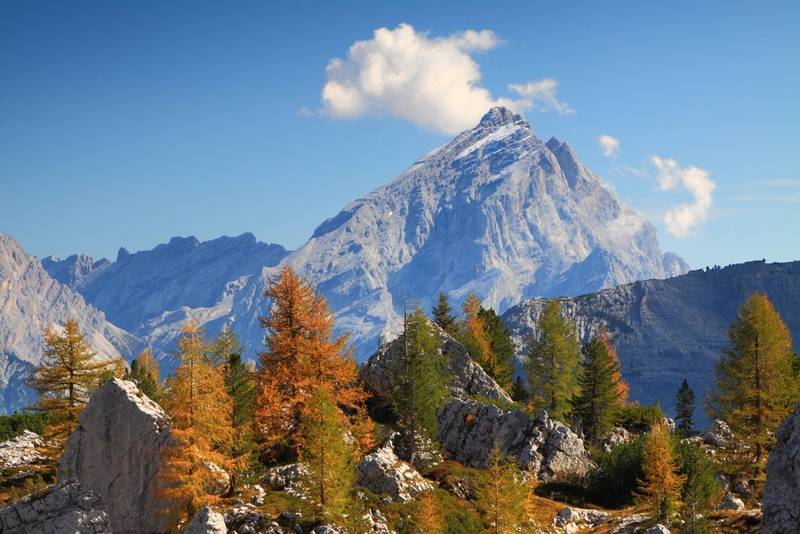
In the heart of Northern Italy, the Dolomites are one of Europe’s most breathtaking mountain ranges. Recognized as a UNESCO World Heritage site, these towering peaks are famous for their striking jagged cliffs, lush valleys, and vibrant alpine meadows. Whether you’re an avid hiker, a skiing enthusiast, or simply someone looking to escape into nature’s grandeur, the Dolomites offer an unforgettable experience. This stunning region also boasts rich cultural heritage, with influences from both Italian and Austrian traditions, making it a unique blend of natural beauty and history. From the iconic Three Peaks of Lavaredo to the serene alpine lakes, the Dolomites are a must-visit for anyone seeking adventure and tranquility in one of the most picturesque corners of Europe.
Photo florin-stana/shutterstock
Val di Funes
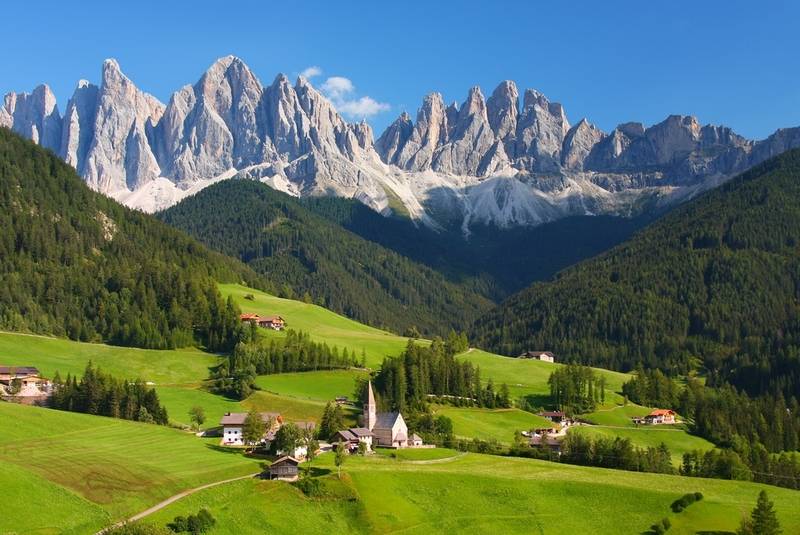
Val di Funes dan-breckwoldt/shutterstock
Tucked away in the heart of the Dolomites, Val di Funes (also known as Villnöss Valley) is one of the most picturesque and serene valleys in the region. Surrounded by towering peaks such as the Geisler Group, this charming valley is renowned for its breathtaking landscapes, traditional alpine villages, and tranquil atmosphere. It’s a paradise for nature lovers, photographers, and anyone seeking a peaceful retreat.
The valley is especially famous for its iconic Church of St. Magdalena, with its stunning backdrop of the jagged Geisler mountains. The sight of the church against the towering peaks is one of the most photographed views in the Dolomites. But beyond the church, Val di Funes is a haven for outdoor enthusiasts. Hiking trails of varying difficulty levels wind through meadows, forests, and pastures, offering incredible views of the Dolomites at every turn. In the winter months, the area transforms into a quiet winter wonderland, perfect for cross-country skiing, snowshoeing, and peaceful walks through the snow-covered landscape.
How to Get There
Val di Funes is located about 40 km north of the city of Bolzano in South Tyrol, Italy. It’s easily accessible by car, with the nearest major town being Bressanone (Brixen), which is about a 20-minute drive away. From Bressanone, you can follow the scenic road that leads into the valley. Alternatively, there are bus connections from Bolzano and Bressanone that will take you directly into the heart of the valley.
If you’re coming from outside the region, the nearest airports are Bolzano (about 40 minutes away), Innsbruck (about 2 hours), or Verona (about 2.5 hours). Once you’re in Val di Funes, getting around is easiest by car, although some hiking trails are also accessible by public transport in the warmer months.
Exploring Val di Funes
Once you’re in the valley, the best way to explore is on foot. There are numerous hiking trails that cater to all levels of fitness and experience, from leisurely walks through the meadows to more challenging mountain hikes. One of the most popular routes is the Geo-Trail, which takes you through the valley with informative signs explaining the geological history of the Dolomites.
For a truly unique experience, take a stroll along the Funes Panoramic Trail, which offers some of the best views of the Geisler peaks and the traditional farmhouses dotted throughout the valley. If you’re up for a bit more adventure, the Puez-Odle Nature Park offers a network of trails that take you higher into the mountains, where you can witness the stunning contrast of rugged rock formations and lush alpine meadows.
In winter, Val di Funes remains quieter than some of the more tourist-heavy areas in the Dolomites, offering a peaceful setting for snow activities. It’s also a fantastic place to simply relax, enjoy the breathtaking views, and soak in the tranquility of the area.
Lago di Dobiacco
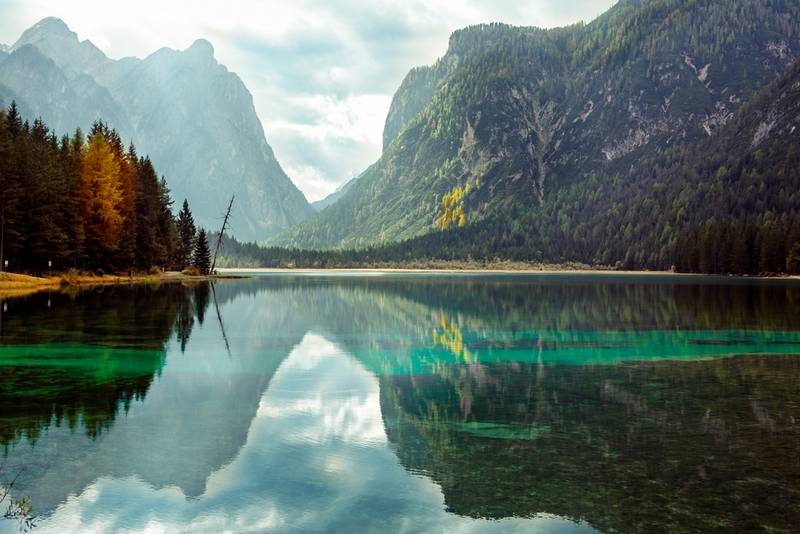
Lago di Dobiacco. val-thoermer/shutterstock
In the Alta Pusteria region, Lago di Dobiacco (also known as Toblacher See) is a stunning alpine lake that captivates visitors with its crystal-clear waters and surrounding mountain scenery. The lake, which lies at the foot of the Dürrenstein mountain and close to the Three Peaks of Lavaredo, is a perfect place to relax, enjoy nature, and immerse yourself in the quiet beauty.
Lago di Dobiacco is often overlooked by the larger crowds heading to more famous spots, making it a peaceful retreat for those seeking solitude or a break from the more tourist-heavy areas. The calm waters of the lake reflect the surrounding peaks, creating a picturesque scene that is perfect for photography, boating, or simply enjoying the serenity of the alpine landscape.
How to Get There
Lago di Dobiacco is located near the town of Dobbiaco (Toblach) in South Tyrol, Italy, approximately 100 km north of Bolzano. The lake is easily accessible by car or public transportation from the town, which is a hub for many of the region’s outdoor activities. If you’re coming by car, take the SS49 road toward Dobbiaco and follow signs to the lake; it’s just a short drive from the town center.
Public transport is also available, with frequent bus and train connections to Dobbiaco from Brunico or San Candido (Innsbruck). Once in Dobbiaco, the lake is just a 5-minute walk or a short bus ride away.
If you’re traveling internationally, the nearest airports are Bolzano (about 1.5 hours away) and Innsbruck (around 2 hours). The region is also well-connected by train to other major cities in northern Italy and Austria.
Exploring Lago di Dobiacco
While Lago di Dobiacco is small compared to some other lakes in the Dolomites, it offers plenty of activities for nature lovers and outdoor enthusiasts.
Hiking: The lake is surrounded by a network of scenic hiking trails, perfect for all levels of walkers. One of the most popular routes is the Lake Loop, a leisurely 3-km path that circles the lake, offering stunning views of the water and surrounding mountains. The trail is flat and suitable for families, casual walkers, and photographers looking for the perfect shot of the lake’s reflection.
Cycling: For cyclists, the Drava Cycle Path (known as Drau Radweg) runs through Dobbiaco and follows the river through lush forests and alpine meadows. It’s an easy, scenic route that connects with other parts of the Dolomites and is great for a relaxed cycling experience.
Boating & Fishing: During the warmer months, you can rent a rowboat and spend some peaceful time on the lake. The calm waters make it a tranquil spot for a relaxing boat ride. Fishing is also allowed, and anglers can enjoy a day by the water, casting their lines into the deep, cool lake.
Winter Activities: In the winter, the area transforms into a magical snow-covered landscape. Lago di Dobiacco is a popular spot for cross-country skiing and snowshoeing, with well-maintained tracks leading through snowy forests and alongside the lake. The quiet, peaceful atmosphere is perfect for anyone looking to enjoy winter in the Dolomites without the crowds.
The Surrounding Area
Besides the lake itself, the area around Lago di Dobiacco offers several other natural attractions and cultural experiences. The nearby Sesto Dolomites are a popular area for hiking, climbing, and skiing. Also close by is the Prags Dolomites Nature Park, a serene area perfect for outdoor exploration.
In the town of Dobbiaco, you can visit the Dobiaco Valley Museum, which focuses on the region’s history, culture, and the natural environment of the Dolomites. For those interested in history, Dobbiaco is also famous for its proximity to WWI sites, where you can learn about the battles fought in the Dolomites during the war.
Karerlake
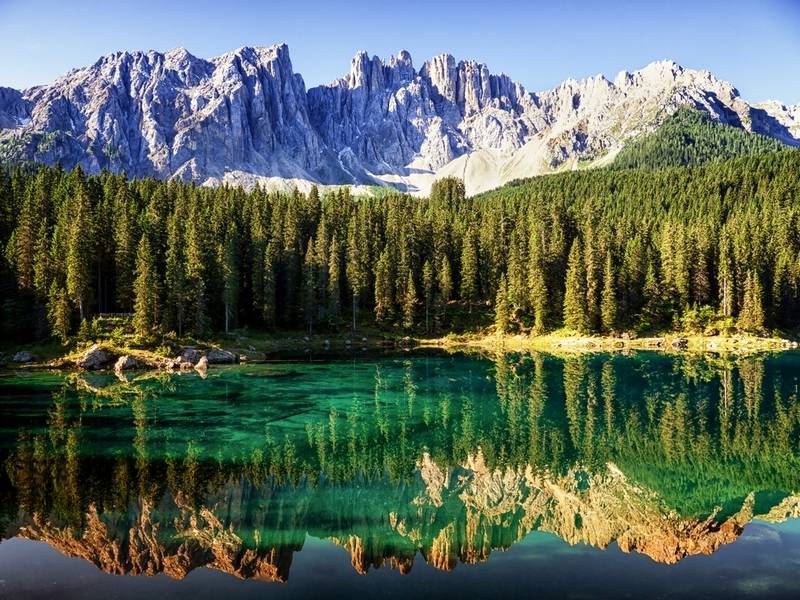
Karerlake. foottoo/shutterstock
Tucked away in the heart of the South Tyrol region, Karersee (also known as Lake Carezza) is one of the Dolomites’ most stunning hidden gems. Often referred to as the “Rainbow Lake” due to the beautiful reflections of the surrounding Latemar Mountains, Karersee is a vibrant turquoise lake that enchants visitors with its magical colors and serene beauty. This small but picturesque lake is framed by a dense forest of pine trees, offering a peaceful and idyllic atmosphere that attracts nature lovers, photographers, and anyone seeking a quiet retreat in the mountains.
Legend has it that Karersee was formed by a sorcerer who fell in love with a beautiful wood nymph, and the lake’s magical hues are said to be a result of their forbidden love. While the legend adds a touch of mystique to the lake, its natural beauty speaks for itself.
How to Get There
Karersee is located near the village of Nova Levante (Welschnofen), about 20 km southeast of Bolzano. The lake is easily accessible by car, with a well-maintained road leading directly to the parking lot near the lake’s edge. From there, it’s just a short walk to the water, where you can take in the stunning views of the lake and its surroundings.
For public transportation, you can take a bus from Bolzano to Nova Levante, followed by a short walk or a local shuttle to the lake. The closest train station is in Bolzano, which is connected to major cities in Italy and Austria. From Bolzano, it’s about a 30-minute drive to the lake.
The nearest airports to Karersee are Bolzano (approximately 30 minutes away) and Innsbruck (around 1.5 hours away), making it a great day-trip destination from both locations.
Exploring Karersee
Though small in size, Karersee offers a variety of activities for visitors who want to connect with nature and explore the surrounding landscapes.
Walking and Hiking: The area around the lake is a great place for leisurely walks. The Karersee Lake Loop Trail is an easy, 1-hour walk that circles the lake, offering different vantage points for photography and sightseeing. The tranquil forest surrounding the lake creates a peaceful environment for a short stroll or a relaxing picnic by the shore.
Photography: Karersee is often considered one of the most photogenic spots in the Dolomites. The contrast between the vibrant turquoise water and the dark green pine forest, with the Latemar mountains rising dramatically in the background, makes for an incredible scene, particularly at sunrise or sunset. The lake’s reflective surface is perfect for capturing stunning mirror-like images.
Winter Activities: In winter, Karersee is equally enchanting, with snow-capped peaks and a frozen lake transforming the area into a winter wonderland. The lake is located near Obereggen, which is part of the Etschtal Ski Resort, offering opportunities for skiing, snowboarding, and other winter sports in the surrounding area. Snowshoeing and winter hiking are also popular activities, and the quiet surroundings make it a perfect place to enjoy the snow-covered landscape in peace.
Nearby Attractions: The Latemar Mountains, towering over the lake, are a popular spot for more challenging hikes, climbing, and skiing in the colder months. Another nearby attraction is the Karerpass, a mountain pass that connects the Val di Fiemme and the Val d’Ega, offering beautiful panoramic views of the Dolomites and excellent hiking routes.