On the banks of the Vistula River, Krakow is one of Poland’s most captivating cities, blending a rich history with vibrant modern life. As the former capital of Poland, Krakow has played a pivotal role in shaping the nation’s culture, art, and identity. The city is an enchanting mix of medieval architecture, cobblestone streets, and a lively atmosphere that draws visitors from all over the world. Whether you’re exploring the awe-inspiring Wawel Castle, wandering through the historic Old Town (a UNESCO World Heritage site), or sampling Polish cuisine in one of the many cozy cafes, Krakow offers something for every traveler. With its blend of rich cultural heritage, dramatic history, and a youthful, dynamic energy, Krakow is a city that leaves a lasting impression.
Krakow’s City Center: The Heart of History and Culture
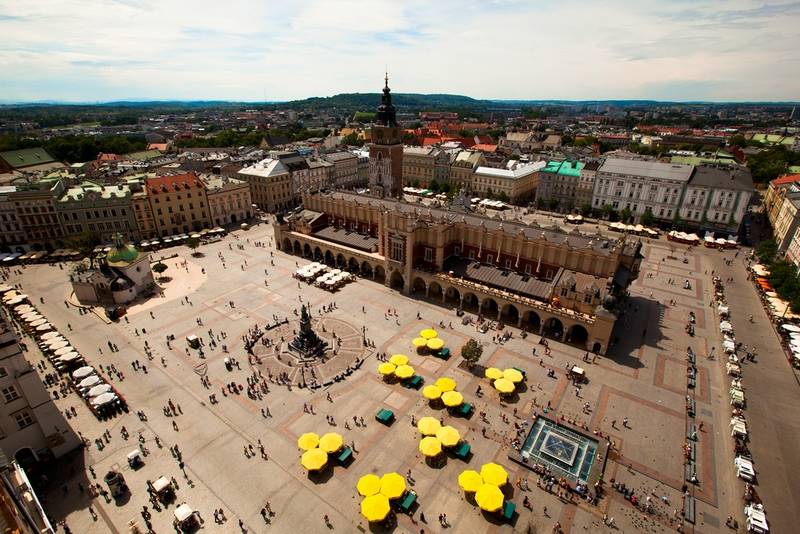
Market square, Krakow. dmitry-berkut/shutterstock
The city center of Krakow is filled with charming streets, beautiful squares, and architectural marvels. At the core of the city lies the Main Market Square (Rynek Główny), one of the largest medieval town squares in Europe, and undoubtedly the city’s most iconic landmark. Surrounded by historical buildings, bustling cafes, and lively street performers, this vibrant square is the heart of Krakow’s cultural and social life. In the center, you’ll find the Cloth Hall (Sukiennice), an impressive Renaissance-era building that once served as a trading center and now hosts artisan shops and galleries.
The square is also home to the St. Mary’s Basilica, with its stunning altarpiece and the famous bugle call, or Hejnal, that is played from the church tower every hour. The city center extends beyond the Market Square, with narrow alleyways leading to hidden gems like the Planty Park—a green belt that encircles the Old Town, offering peaceful spots for a stroll or rest. Walking through Krakow’s city center feels like stepping back in time, as you experience the perfect blend of medieval charm and modern-day energy.
Wawel Castle
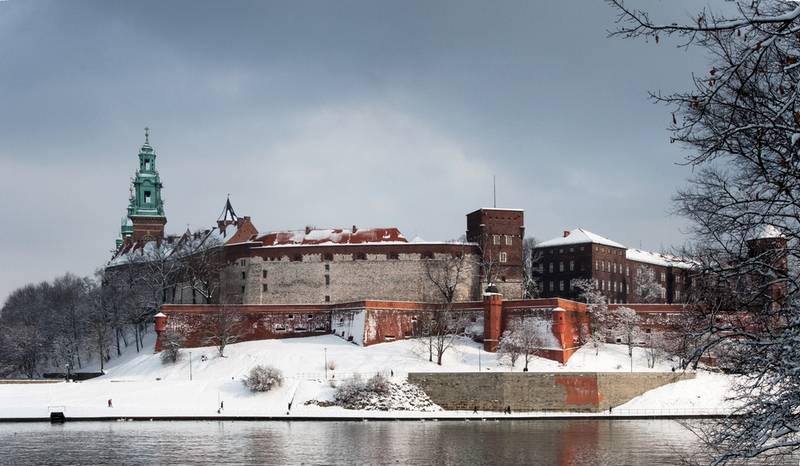
Wawel Castle on the Vistula river. nahlik/shutterstock
Perched atop Wawel Hill, Wawel Castle stands as one of Poland’s most iconic landmarks and a symbol of the nation’s rich royal history. This majestic fortress was once the residence of Polish kings and queens for over 500 years, and today it remains a stunning reflection of the country’s cultural and political heritage. The castle complex is a blend of architectural styles, from the Romanesque to the Renaissance, showcasing the diverse influences that shaped its development over centuries. Visitors can explore the grand Royal Apartments, where Polish monarchs once lived, and marvel at the Wawel Cathedral, a place of coronation for Polish kings and home to royal tombs.
The castle also houses several fascinating museums, including the State Rooms, the Crown Treasury, and the Wawel Dragon’s Den—a nod to the legendary dragon that once terrorized the city. Standing proudly above the Vistula River, Wawel Castle offers not only a glimpse into Poland’s royal past but also some of the best panoramic views of Krakow, making it a must-visit for anyone exploring the city.
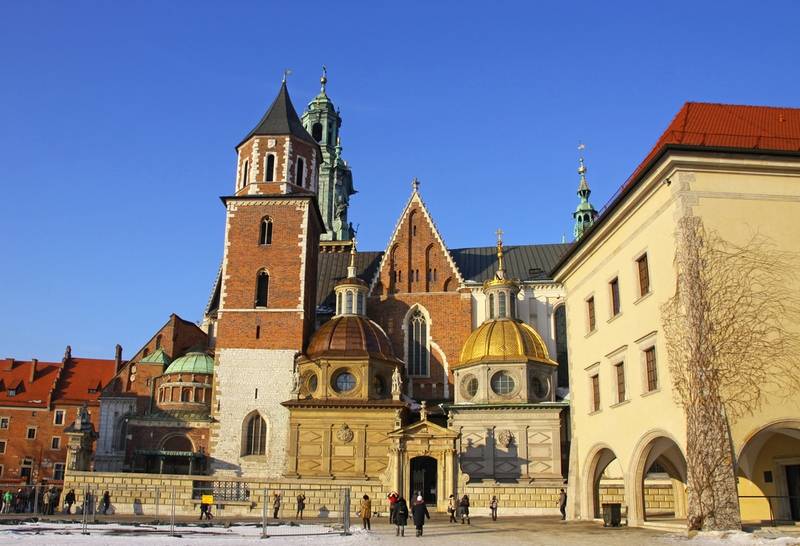
Wawel Castle complex. katatonia82/shutterstock
Wieliczka Salt Mine: A World Beneath The Earth
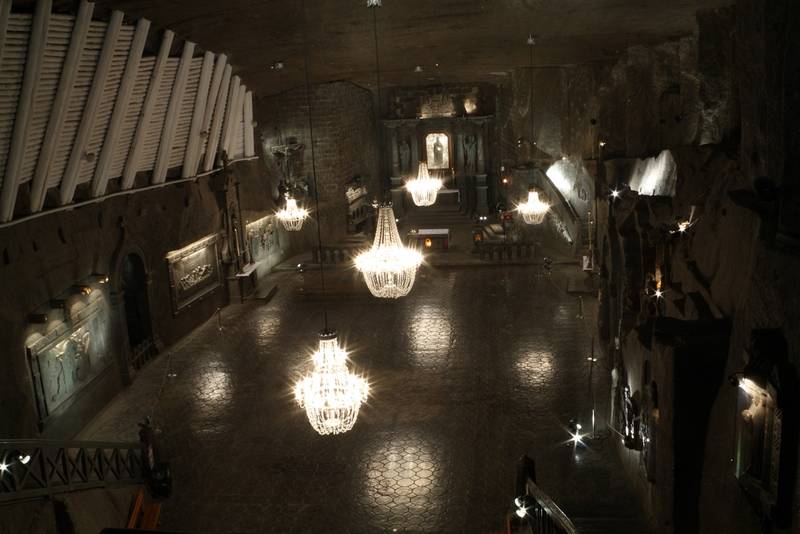
The Chapel of Saint Kinga in Wieliczka salt mine. hal_p/shutterstock
Just a short drive from Krakow, the Wieliczka Salt Mine is one of the oldest and most famous salt mines in the world, offering visitors a fascinating journey deep beneath the Earth’s surface. Operating for over 700 years, this UNESCO World Heritage site is a labyrinth of tunnels, chambers, and underground lakes, stretching over 287 kilometers. The mine’s rich history is showcased through its stunning salt-carved sculptures, intricate chapels, and the Wieliczka Salt Museum, which offers insight into the mining process and the lives of those who worked in the depths.
One of the highlights is the Chapel of St. Kinga, an awe-inspiring underground church entirely carved from salt, with chandeliers made of salt crystals that shimmer in the dim light. Visitors can take guided tours through the mine’s various levels, exploring its expansive chambers and learning about its historical significance as a major source of salt for the region. The Wieliczka Salt Mine offers a truly unique experience that blends history, art, and geology, making it an essential stop for anyone visiting Krakow.
Benedictine Abbey of Tyniec
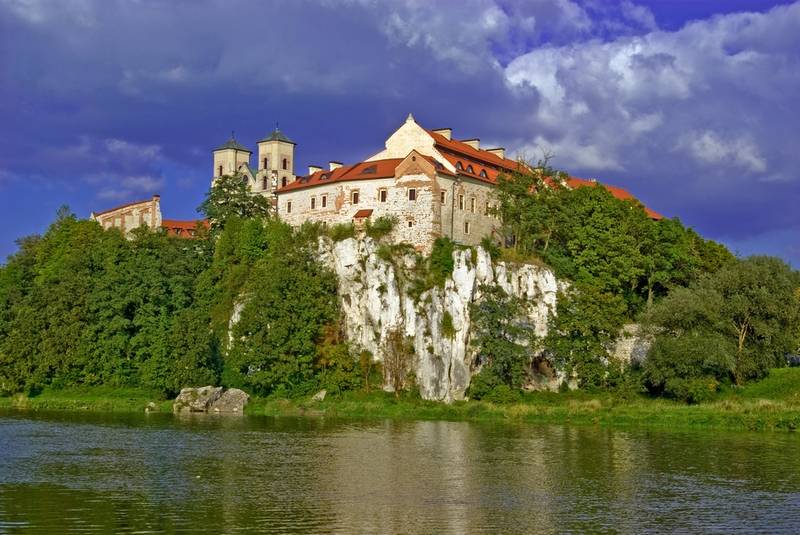
Benedictine Abbey of Tyniec, Krakow. pansushe/shutterstock
Located just a short distance from Krakow, the Benedictine Abbey of Tyniec is one of Poland’s oldest and most picturesque monasteries, offering a peaceful retreat and a glimpse into the country’s monastic history. Perched on a cliff overlooking the Vistula River, the abbey dates back to the 11th century, when it was founded by Polish King Casimir the Restorer. The stunning Romanesque church and surrounding buildings have been beautifully preserved, and the abbey continues to function as an active monastery, home to a community of Benedictine monks.
Visitors can explore the abbey’s peaceful grounds, take in the panoramic views of the river and the surrounding countryside, and learn about the history and daily life of the monks who have lived here for over 1,000 years. The abbey also houses a small museum with religious artifacts and exhibits about the region’s spiritual heritage. With its serene atmosphere, breathtaking views, and rich history, the Benedictine Abbey of Tyniec is a perfect spot for those looking to escape the bustle of the city and connect with Krakow’s deeper historical and spiritual roots.